Tending The Weeds Of Your Garden
There is a garden on our farm that I've ignored for months.
Not because I didn't care about it. Quite the opposite.
Like every other grower, spring arrives all at once. Seed trays fill faster than you can empty them. Transplants need to go in the ground. Workshops need to be prepared. Markets begin. Weddings arrive. Then, just when the fields were finally beginning to look like all those months of planning were paying off, the hail came. Overnight, the priority shifted from growing to replanting and replanning. Every spare hour went back into sowing trays, replacing plants, and trying to recover what had been lost. -that’s where I’ve been the last two weeks.
This perennial garden wasn't urgent, so it waited.
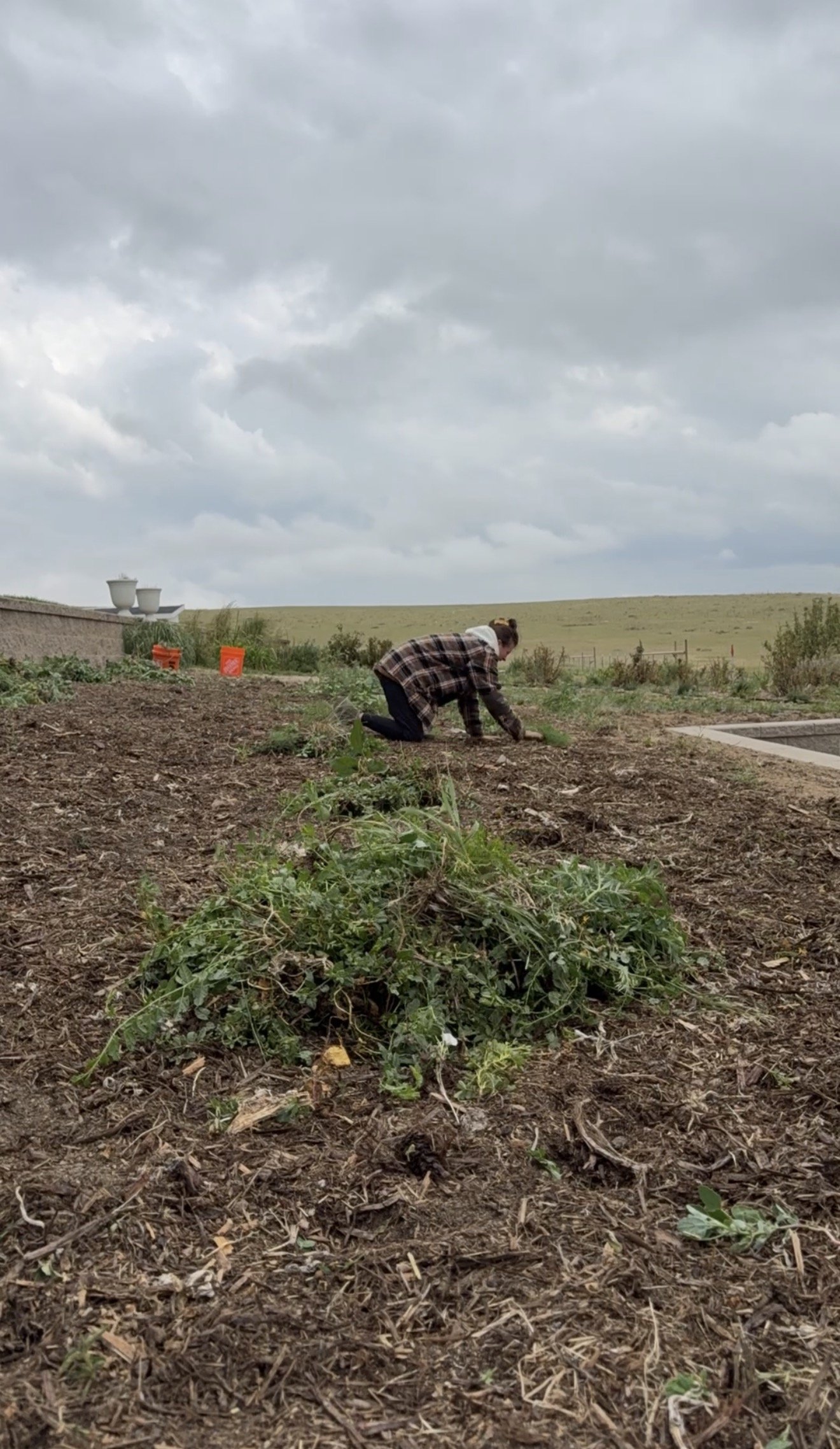
It wasn't empty while it waited.
The weeds made sure of that.
This garden is supposed to become one of my favorite places on the farm—we just finished a retaining wall around it, for a firepit area on the other side.. Many of the plants are already growing rootbound and restless in pots nearby. But before a single one of them goes into the ground, something else has to come out…
So this week, I found myself on my hands and knees with a bucket beside me, pulling weeds.
For hours.
One after another. Because a machine would destroy the soil structure I've been building for years on this plot.
So, somewhere between digging out another taproot and shaking the dirt back into the bed, Proverbs 4:23 kept coming to mind: "Above all else, guard your heart, for everything you do flows from it."
I've read that verse countless times, but sitting in the dirt, it hit differently.
Neglect doesn't stay contained.
Leave a garden alone long enough, and the weeds don't politely remain in one corner. They spread. They compete. They steal water, nutrients, sunlight, and space from the very things you intended to grow.
The heart isn't much different.
If Jesus spent so much of His ministry talking about seeds, soil, vines, fruit, pruning, and harvest, maybe it's because our spiritual lives behave much more like gardens than we realize. We don't drift toward fruitfulness. Gardens don't accidentally flourish. Neither do hearts.
The longer I pulled weeds, the less I was thinking about the garden in front of me and the more I was thinking about the one inside me. God has a way of teaching through the work itself. I wasn't looking for an idea to write about. I was simply doing what needed to be done. Somewhere between the labor and the silence, He began asking me questions I wasn't expecting.
What has quietly taken root in my life while my attention was somewhere else?
What habits have been stealing nutrients from things that actually matter?
What lies have I allowed to spread underground without confronting them?
What have I become comfortable growing that Christ never intended to occupy space in my heart?
As I kept pulling weeds, I realized they weren't all the same. Some came out with almost no effort. Others snapped off at the surface, leaving most of the root behind. Some spread underground farther than I expected. Some fought back with thorns. Some had grown so large they couldn't simply be pulled—they had to be cut back before I could even begin digging them out.
And I couldn't shake the thought that maybe our struggles aren't all the same either. And, I'd like to dissect each one. Because, I don't think God was showing me weeds that afternoon. I think He was asking me where mine were.
The Small Weeds
It didn't take long before I noticed a pattern.
The smallest weeds, the babies, were the easiest to pull, but they were also the easiest to ignore.
As I worked my way across the garden, I'd occasionally come across a tiny seedling. It would have taken less than a second to remove it. Two fingers, one quick tug, and it was gone. Yet I found myself stepping over them more than once because they didn't seem important compared to the larger weeds demanding my attention.
It made me wonder how often I do the same thing in my own life.
The habits that concern us most are usually the obvious ones. The anger that finally erupts. The addiction that has taken control. The anxiety that's become impossible to ignore. We notice those because they've become too large to miss.
But they rarely started there.
Most things that compete for our hearts begin as something small enough to justify. Just one bitter thought. Just one afternoon of avoiding what God has asked us to do. Just one conversation filled with gossip. Just one comparison. Just one lie we tell ourselves. Just one moment of choosing comfort over obedience.
Small enough to ignore. Small enough to tell ourselves, "I'll deal with it later."
But gardens don't care about our intentions. Neither do our hearts.
As I kept pulling weeds, I couldn't help but think about something Jesus says: "Whoever can be trusted with very little can also be trusted with much, and whoever is dishonest with very little will also be dishonest with much."
Luke 16:10 (NIV)
The Kingdom of God has always been concerned with the small things because small things reveal the condition of our hearts.
A weed doesn't become difficult to remove overnight. It becomes difficult because it was given time.
Neither does pride, resentment, lust, greed, or comparison.
Neither does the quiet belief that we're somehow beyond needing God's correction.
James describes this progression with remarkable clarity: "But each person is tempted when they are dragged away by their own evil desire and enticed. Then, after desire has conceived, it gives birth to sin; and sin, when it is full-grown, gives birth to death."
James 1:14–15 (NIV)
Did you notice the language?
1. Conceived. 2. Gives birth. 3. Full-grown. 4. Death
Even sin has a growing season.
As I sat there pulling those tiny weeds, I realized something that was much harder to admit than I expected. I spend a lot of time asking God to remove the "big weeds" from my life while quietly excusing the little ones. Maybe that's because the little ones don't cost me much yet.
But they will.
The healthiest gardens aren't beautiful because they never had weeds. They're beautiful because someone refused to let the small ones become large ones.
Guarding your heart isn't something you do once. It's something you do every time you notice a tiny weed and decide not to leave it there until tomorrow.
Shallow Roots
One of the weeds I've been pulling the most lately is purslane.
If you garden in Colorado, you know exactly what I'm talking about. It seems to appear overnight. Its thick, fleshy stems creep low across the soil, filling empty spaces between your plants before you even realize it's there.
The funny thing about purslane is that it isn't difficult to pull. Its harmless and even edible. Its roots are shallow. Most of the time, you can grab the base of the plant and lift the entire thing out with almost no effort.
But don't mistake shallow roots for an insignificant weed. Every purslane plant is still taking up space. It's still competing for sunlight, water, and nutrients. It's still growing where I intended something else to flourish.
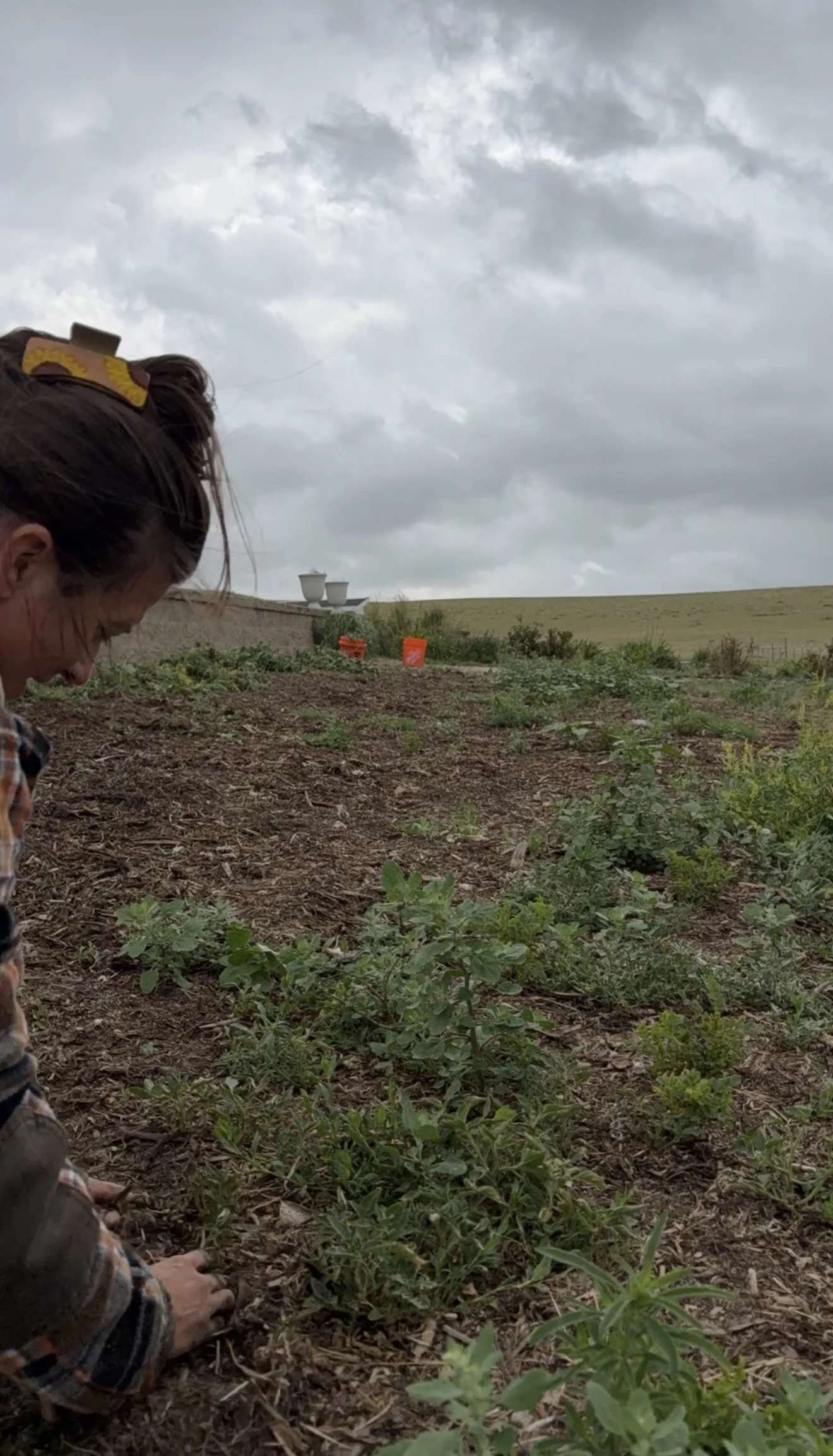
Some weeds looked impressive from above, but when I reached down to pull them, they came out with almost no resistance. Their roots barely reached below the surface. They were easy to remove.
But that didn't make them harmless.
It made me think about how often we evaluate things in our lives by asking, "Is this wrong?" And, maybe that's the wrong question. Possibly, the better question is, "Is this helping me become who God is calling me to be?"
Not everything occupying our hearts is sinful. Some things are simply distractions: hours spent mindlessly scrolling, constant entertainment because silence feels uncomfortable.
Saying yes to every opportunity until we've left no margin for prayer, rest, or the people God has actually entrusted to us.
People pleasing, perfectionism, and living busy enough that we never have to slow down and let God examine our hearts.
None of these are necessarily giant moral failures. They're shallow weeds.
Easy to pull.
Yet they quietly consume the space where something far more fruitful could have grown.
Paul writes:“I have the right to do anything,' you say—but not everything is beneficial. 'I have the right to do anything'—but not everything is constructive."
1 Corinthians 10:23 (NIV)
That verse has challenged me more as I've gotten older. Because following Christ isn't simply about avoiding what is evil. It's also about always choosing what is better. I don't think Satan always succeeds by convincing us to pursue evil. Sometimes he simply keeps us distracted enough that we never pursue what God is inviting us into.
Jesus reminds us of this in His conversation with Martha. Martha wasn't doing something sinful. She was serving. She was busy. Yet Jesus gently redirected her attention: “‘Martha, Martha,' the Lord answered, 'you are worried and upset about many things, but few things are needed—or indeed only one. Mary has chosen what is better, and it will not be taken away from her.'"
Luke 10:41–42 (NIV)
Notice that Jesus didn't condemn Martha for serving. He simply reminded her that not everything deserves equal space.
Sitting in the dirt, pulling another shallow-rooted weed, I found myself asking a harder question than I expected. If I removed everything from my life that wasn't necessarily wrong, but also wasn't leading me toward Christ...what would be left?
What conversations would I have more often? What books would I finally read? How much more would I pray? How much more present would I be with my children? How much more creative would I become?
How much more quickly would I hear God's voice if there were fewer things competing for my attention?
Sometimes the greatest obstacle to flourishing isn't a deep-rooted sin. Sometimes it's a shallow-rooted distraction that's simply been allowed to stay too long.
Every weed I pulled left behind a small patch of open soil. It wasn't much. But every little opening made room for something better.
I wonder what space we can make in us.
Deep Taproots
Not every weed spreads.
Some simply go straight down.
Most people think of a Dandelion as the bright yellow flower or the fluffy seed head, but neither of those is what makes a dandelion so persistent. It's the taproot.
If you've ever pulled a mature dandelion, you know the moment I'm talking about. You wrap your fingers around the base of the plant, give it a firm tug, and the root just keeps coming.
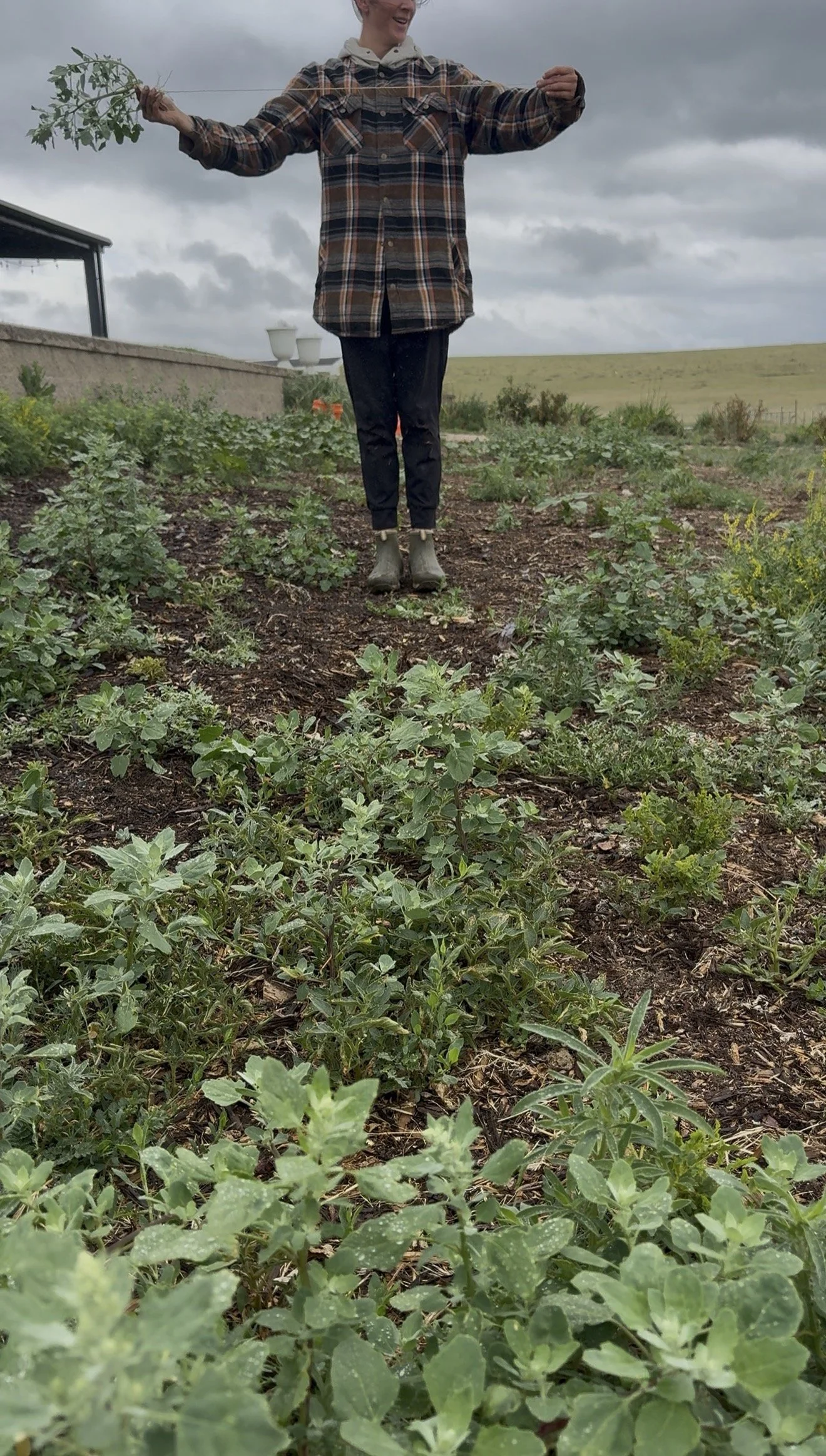
Longer.
Longer.
Longer.
You hold it up, almost surprised that something so ordinary above the soil was hiding a magnificent root that deep beneath it.
There's a strange satisfaction in pulling an entire taproot. You know you got it. That particular weed isn't coming back.
Unless...
It snaps.
Every gardener knows that feeling too. You don't even have to look down to know what happened. The tension suddenly releases, your hand flies back a little farther than expected, and all that's left in your fingers is half a root.
Immediately, you have a decision to make. You can get your hori hori knife, dig a little deeper, and deal with it now...
Or you can leave it, knowing full well you've only postponed the problem. In a few weeks, that same dandelion will be right back where you found it. Nothing has changed except the amount of time you've delayed dealing with it.
As I stood there holding one impossibly long taproot after another, I couldn't help but wonder how many things in my own life worked the same way.
Some struggles aren't shallow at all. Sometimes anger isn't simply anger. Sometimes it's years of never learning healthy emotional regulation.
Sometimes a scarcity mindset isn't really about money. It's growing up believing there would never be enough.
Sometimes our relationship with food has very little to do with food. It's tied to comfort, shame, celebration, control, or survival.
Sometimes we become parents before we've ever stopped to examine the parenting we experienced ourselves.
The behavior we see above the surface often isn't the root. It's simply what the root has been feeding all along.
Scripture says: "See to it that no bitter root grows up to cause trouble and defile many."
Hebrews 12:15 (NIV)
I find it interesting that Scripture doesn't say, "Watch out for bitter fruit." It says, "Watch out for bitter roots."
God has always been concerned with what lies beneath the surface because that's where everything else begins. The soil is our soul, I like to say.
I think we spend a lot of our lives asking God to change our behavior. I wonder how often He's inviting us to examine our roots instead.
Ask questions like: “Why do I react this way? Why does this hurt so much? Where did I first learn this? “Is this something I truly believe...or simply something I've always carried?”
Those aren't easy questions. Neither is digging around a broken taproot.
But avoiding the work doesn't remove the root. It only guarantees we'll meet it again.
As I dropped another taproot into the bucket, I realized something I don't want to forget.
There are moments in life when we can either tolerate the discomfort of digging deeper today...
Or we can keep introducing ourselves to the same weed every growing season.
I don't know about you, but I'm getting tired of meeting the same weeds.
Rhizomatic Spreading Nightmares
If there is one weed that can humble a gardener, it is field bindweed.
Bindweed does not simply grow in one place. It spreads underground through an aggressive root system, sending up new shoots wherever it finds an opening. You can pull every visible vine from the surface and still have an entire network alive beneath the soil. Just when you think you finally cleared the bed, another small green shoot appears a few feet away like it has been waiting for you.
It is infuriating.
And if I am honest, that is part of what makes bindweed such an accurate teacher.
Some weeds are not removed in one afternoon. Some are managed over an entire growing season. Sometimes over several growing seasons. Sometimes, for your entire gardening career. You keep showing up. You keep pulling. You keep weakening what is underneath by refusing to let what is above ground keep growing unchecked.
That kind of weeding does not feel victorious in the moment. It feels repetitive. It feels discouraging. It can make you wonder if your work is even making a difference.
But it is.
Every time you remove the growth, you interrupt what is feeding the root system. Every time you refuse to let it climb and choke what you planted, you protect the garden. The work matters, even when the weed comes back.
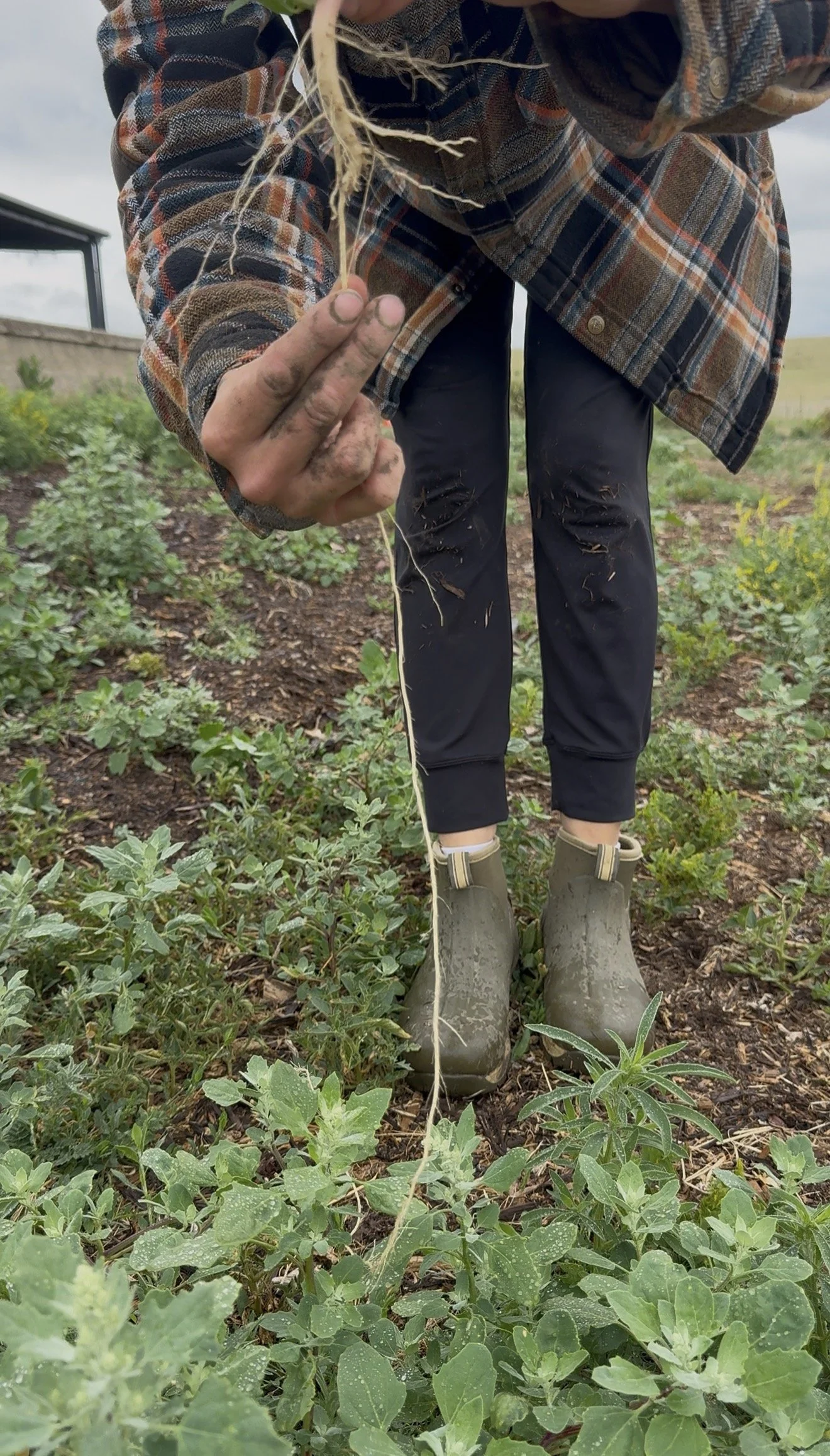
As I pulled bindweed from the bed, I thought about the struggles in our lives that work the same way. The ones that do not disappear after one honest prayer, one hard conversation, one therapy session, one good week, or one moment of surrender.
Anxiety, Depression, ADHD, Grief, Chronic Issues can feel like that. Old thought patterns can feel like that. The temptation to return to destructive coping mechanisms can feel like that.
And I think this is where many of us get discouraged. We think if we were really healing, we would not have to keep tending the same ground. We think if God were really working, the struggle would be gone completely.
But Scripture does not always describe faithfulness as instant removal. Sometimes it describes it as endurance.
Paul writes:“Not that I have already obtained all this, or have already arrived at my goal, but I press on to take hold of that for which Christ Jesus took hold of me.”
Philippians 3:12 (NIV)
I love that Paul does not pretend to be finished. He says, “I press on.” And that is not weakness, its faithfulness.
Paul also knew what it meant to ask God for removal and receive sustaining grace instead. When he pleaded with the Lord to take away his thorn, God answered: “My grace is sufficient for you, for my power is made perfect in weakness.”
2 Corinthians 12:9 (NIV)
That verse does not mean God delights in our pain. It means His presence is not proven only by what He removes. Sometimes His power is revealed in the strength He gives us to keep tending what has not yet disappeared.
Bindweed reminds me that recurring does not always mean undefeated. Sometimes recurring means this part of the garden needs faithful management.
It needs attention, humility, and consistency.
It needs us to stop pretending that because something came back, all the previous work was wasted.
As I pulled another vine loose from the soil, I had to ask myself the hard questions: 1. Where have I confused ongoing management with failure? And 2. Where have I made the mistake of wanting to give up, because it just keeps coming up?
Because maybe the fact that I am still tending the ground is not evidence that I have lost.
Maybe it is evidence that I have not quit.
*I want to pause here, and remind my reader that I am not a licensed psychologist, or any kind of doctor for that matter. So I implore you to explore these bigger concepts with a licensed professional. Speak with your therapist, doctor, and even other clergy members about the previous bigger concepts, and the ones we are about to dive into further.
Weeds that bite back
Some weeds don't just take up space.
Some weeds fight back.
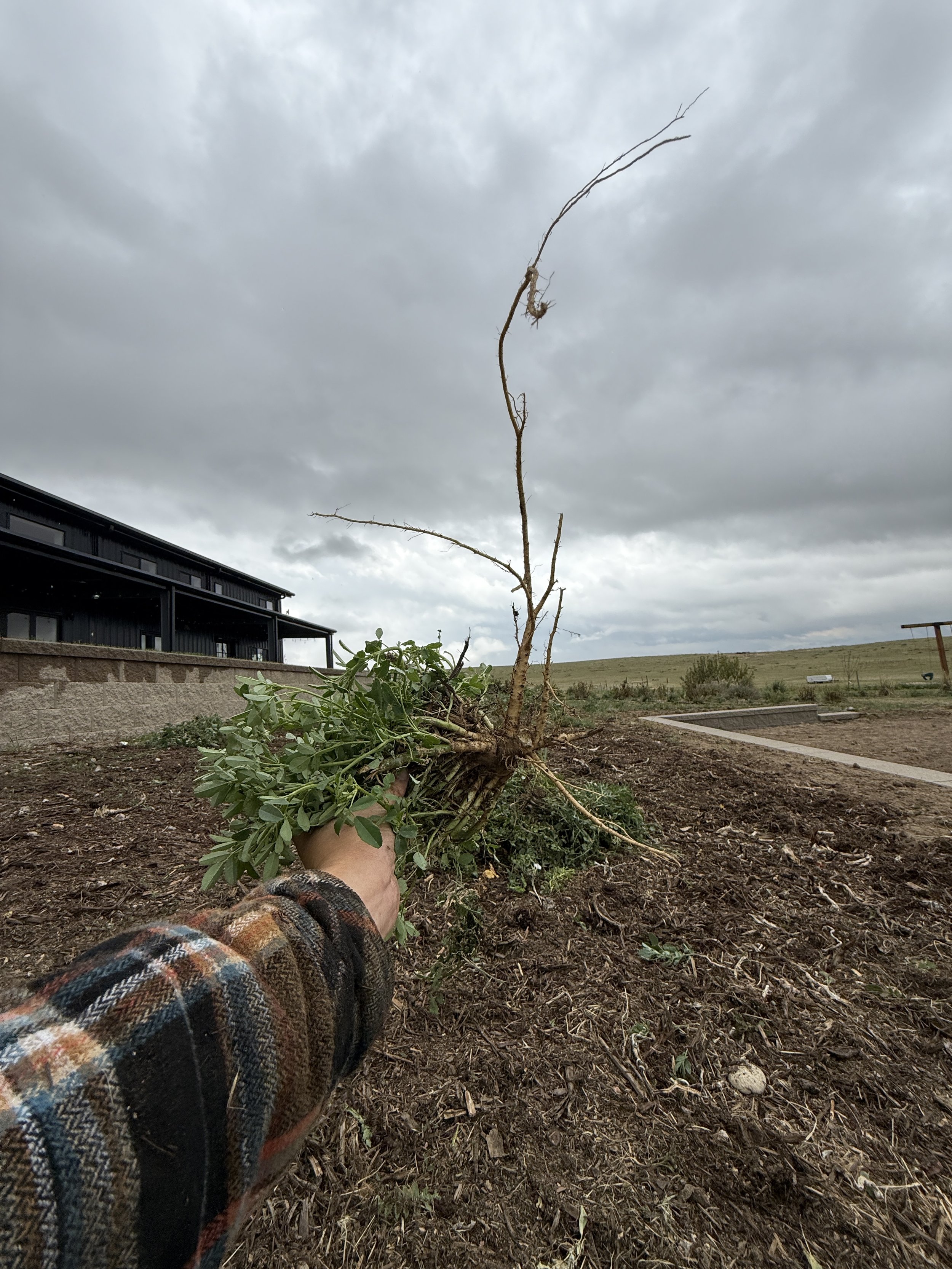
Bull thistle is one of those weeds. The first thing you notice isn't its root system—it's the spines. Every stem, every leaf, even the flower buds are covered in sharp thorns that immediately remind you this isn't a weed you should grab with your bare hands. You only make that mistake once.
After a few painful lessons, you learn to stop what you're doing, walk back to the garage, put on a pair of gloves, grab your hori hori knife or a shovel, and come back prepared. It doesn't make you a weak gardener. It makes you a wise one. Experience teaches you that pretending something won't hurt doesn't make it hurt any less.
As I worked my way through several bull thistles, I couldn't help but think about the thorny things we avoid in our own lives. Not because we believe they belong there, but because we know confronting them is going to hurt.
Some conversations are like that.
Telling someone they've hurt you.
Admitting you've hurt someone else.
Setting a boundary with a family member.
Confessing an addiction.
Asking for help.
Ending an unhealthy relationship.
Choosing forgiveness when every part of you would rather hold onto the bitterness.
These aren't the kinds of weeds we ignore because they're small. We ignore them because they fight back.
I think that's why so many of us spend years walking around them instead of pulling them. We become experts at working around the problem. We justify it. We minimize it. We convince ourselves that if we just avoid that corner of the garden, maybe it won't matter.
But every gardener knows that's not how weeds work. They don't stop growing because we've stopped looking at them.
Paul writes: "Put on the full armor of God, so that you can take your stand against the devil's schemes."
Ephesians 6:11 (NIV)
I've always loved that Paul begins with "put on."
Before he talks about standing, fighting., and victory.
He tells us to prepare.
I don't think that's much different than putting on gloves before grabbing a bull thistle. God has never asked us to walk into painful situations unprotected.
Sometimes those gloves look like trusted friends who will tell us the truth instead of simply telling us what we want to hear. Sometimes they look like a therapist with tools to helps us untangle years of hurt. Sometimes they're an accountability partner who isn't afraid to ask the difficult questions. Sometimes they're simply the truth of Scripture protecting our minds when our emotions try to convince us otherwise.
For a long time, I thought asking for help meant I wasn't strong enough. Gardening has slowly corrected that thinking. No one looks at a gardener using gloves, a shovel, or a hori hori knife to remove a bull thistle and says, "You should have done that with your bare hands."
That would be foolish.
So why do we expect ourselves to confront addiction, depression, years of trauma, broken relationships, or destructive habits with nothing but willpower?
As I dropped another bull thistle into the bucket, I found myself asking a question that was harder than I expected:
What thorny thing have I been avoiding because I keep insisting on facing it alone?
Maybe courage isn't reaching into the thorns with bare hands.
Maybe courage is finally putting on the gloves.
Weeds you don’t know where to begin with…
There is one plant on our property that I dread more than any other.
Wild rose.
I know that probably sounds strange to anyone who doesn't spend much time gardening. Roses are supposed to be beautiful. They symbolize love, romance, and elegance. But wild rose is a different beast.
Left alone, wild rose becomes a thicket. Long arching canes weave over one another until you can hardly tell where one plant ends and another begins. New growth hides old growth. Dead branches disappear beneath living ones. Every direction you reach seems to end with another thorn catching your shirt, scratching your arm, or grabbing hold of your gloves. Before long, the entire area has become one tangled, impenetrable mess.
The hardest part about removing a wild rose thicket is figuring out where to begin. You don't just walk into the middle of it and expect to have it gone by the end of the afternoon. You start by creating a little space. You remove one cane, then another. Slowly, almost imperceptibly, you begin to see the structure hidden beneath the chaos. Only then can you work your way toward the center.
As I looked across the wild rose on our property, I couldn't help but think about the deepest wounds we carry. Trauma rarely exists by itself. Neither does profound grief. One painful experience wraps itself around another until eventually it's difficult to separate what happened from how it shaped us. Fear intertwines with shame. Shame intertwines with identity. Identity intertwines with relationships. By the time we're adults, it can feel impossible to tell where one wound ends and another begins.
I think that's why healing can feel so overwhelming. We aren't looking at one painful memory. We're looking at an entire thicket. It's tangled, overwhelming, and painful to even step into. Many people don't avoid healing because they don't want it. They avoid it because they don't know where to start.
I find so much comfort in the way Scripture describes Jesus. David writes, "The Lord is close to the brokenhearted and saves those who are crushed in spirit."
Psalm 34:18 (NIV)
Notice what David doesn't say. He doesn't say the Lord is waiting for the brokenhearted on the other side of healing. He says the Lord is close. Close enough to enter the thicket with us.
I've noticed that's how healing usually happens. Not all at once, but one counseling session, one honest conversation, one prayer, one memory entrusted to God, one act of obedience at a time. Looking back, those moments rarely seem dramatic. But over time they create enough space for fresh air, sunlight, and new growth to reach places that once felt completely overrun.
As I stood in front of another patch of wild rose, I realized that maybe I've been asking the wrong question. Instead of asking, "God, when will this all be gone?" perhaps the better question is, "God, where would You have me begin today?"
Because maybe healing isn't found in clearing the entire thicket this afternoon.
Maybe healing begins the moment we trust the Master Gardener enough to step into it with Him.
What’s the point of all this work?
After spending hours on my hands and knees pulling weeds, I realized something that should have been obvious from the beginning. Gardeners don't spend their days weeding because they hate weeds. They weed because they love what they're trying to grow.
No one willingly ends a day with aching knees, a sore back, dirt packed under their fingernails, and a bucket full of weeds just for the satisfaction of looking at bare soil. We do it because we can already see the garden that isn't there yet. Every weed we remove is an act of faith. We're making room for flowers we haven't planted, blooms we haven't seen, and a garden that exists only in our imagination for now.
I wonder if that's how God sees us.
I think we sometimes approach our spiritual lives as though the goal is simply to stop doing the wrong things. We focus on removing bitterness, pride, comparison, fear, distraction, or unhealthy habits, but forget that every empty space is an invitation for God to plant something better. The Christian life has never been about simply pulling weeds. It's about cultivating fruit.
Paul describes this beautifully in his letter to the Ephesians: "You were taught, with regard to your former way of life, to put off your old self... and to put on the new self, created to be like God in true righteousness and holiness."
Ephesians 4:22–24 (NIV)
Notice the movement. We are called to put off, but we are also called to put on. God never asks us to empty the garden without filling it again. He replaces bitterness with forgiveness, fear with trust, shame with identity, comparison with contentment, distraction with purpose, and self-reliance with dependence on Him.
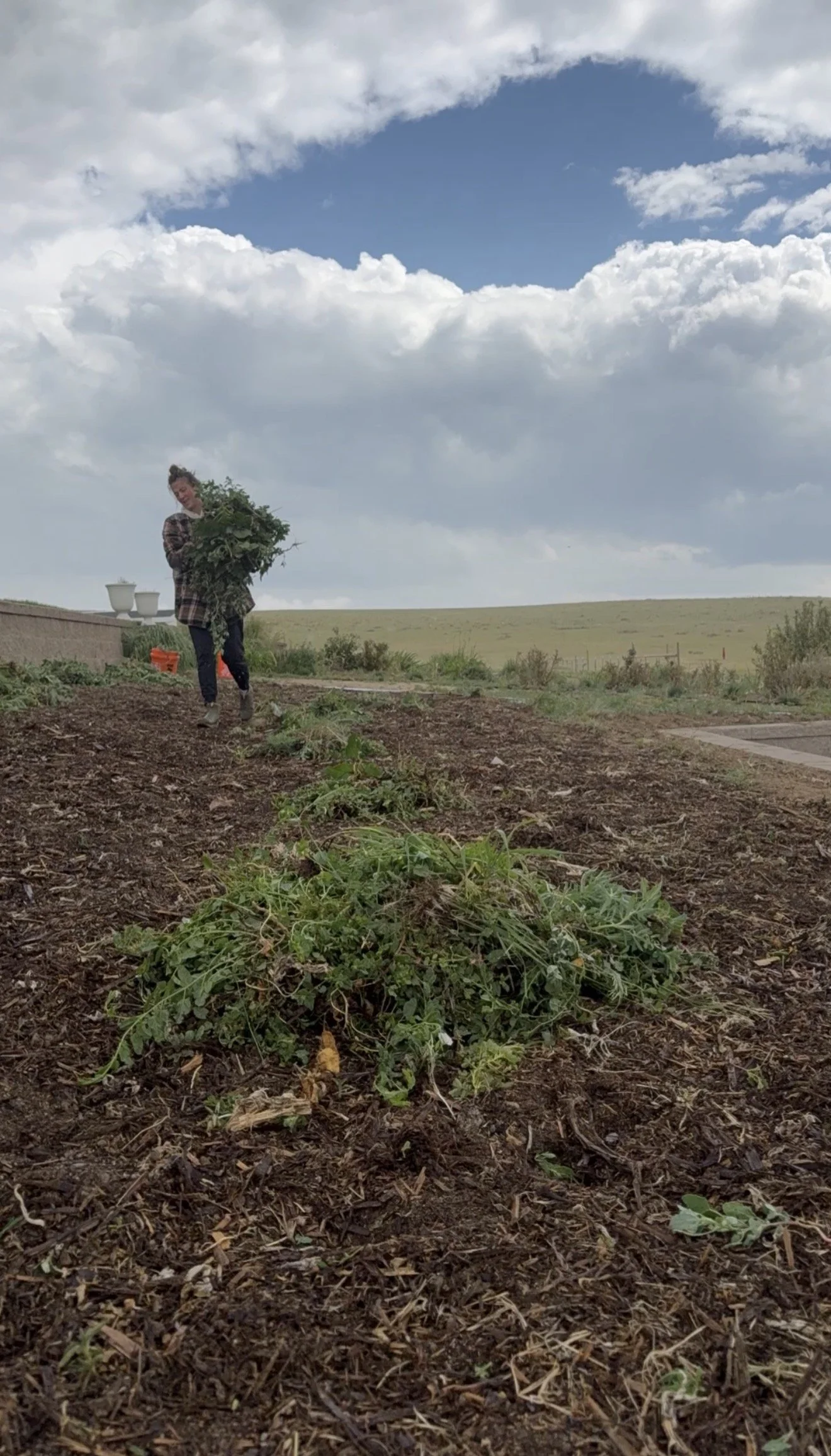
As I looked across that perennial garden, I could already picture the Colorado native flowers that would fill the space. Every armful of weeds I carried away wasn't simply removing something unwanted. It was making room for something I had planned from the very beginning.
I think the Master Gardener looks at us the same way. He isn't fixated on the weeds because He enjoys pointing out our failures. He sees the flowers. He sees the fruit. He sees the person He is faithfully growing us into, even while we're still covered in dirt from the work.
Before we finish, let me remind you…
Maybe you're reading this and you don't feel like you have much of a garden yet. Maybe life has left the ground feeling bare. Maybe you've spent years surviving instead of flourishing. Or maybe you're still standing in front of your own overgrown patch, wondering where to even begin.
If there's one thing gardening has taught me, it's that preparing the ground is never wasted work. Some of the most important days in a garden happen before a single flower is planted. Every weed removed today is one less thing competing with tomorrow's roots. Every hour spent preparing the soil is an investment in a harvest you can't yet see. Opening space for inspiration, creativity, and positive change.
Perhaps that's the season God has you in right now. The waiting we talked about a few blogs back.
Not because He's withholding good things from you, but because He's preparing the ground to receive them. You can do this weeding inside you, in the waiting. Even if you feel lost in what to plant next.
As I gathered my tools and looked back across that perennial bed, I realized something had changed. The weeds weren't all gone. There was still work waiting for me tomorrow. But the garden no longer felt overwhelming. It felt hopeful. Every patch of exposed soil reminded me that something beautiful now had a place to grow.
The same is true of our hearts.
Healing is rarely finished in a day. Sanctification is rarely accomplished in a season. The work of becoming more like Christ is the work of a lifetime. But every weed we pull, every root we confront, every thorny conversation we have, every layer of the thicket we patiently work through is making room for Him to produce something we could never grow on our own.
So tomorrow I'll probably find myself back on my hands and knees in that perennial garden with another bucket beside me. (That will be too small anyway, like today.) My back will ache. My knees will be sore. There will still be hidden weeds left to pull. But now I'll know something I didn't fully understand when I started.
The work was never just about removing weeds.
It was always about making room for the garden God had in mind all along for me.
So, I leave you with this:
If God cleared the ground of your heart, what would finally have room to grow?
You know where I’ll be friends,
Jessica
w/ Shari’s