The Quiet Drought: Outiside and In
Right now, here in Colorado, we are experiencing, yet another, hard drought.
We came out of a winter that barely felt like winter at all. The snowpack—the very thing that feeds our rivers, our reservoirs, our farms—has fallen to record lows, with some measurements showing less than 40% of even the previous worst year on record. This is the kind of number that doesn’t just stay in the mountains. It moves. It makes its way down into our rivers, into our reservoirs, into the soil beneath our feet.
And we’re already feeling it.
Cities across the Front Range are beginning to respond. Water restrictions are being put into place earlier than usual. Outdoor watering is limited. Conservation is no longer a suggestion—it’s a necessity. In some areas, reservoirs are being drawn down and carefully managed just to ensure there will be enough water to sustain communities through the months ahead. Farmers are preparing for reduced allocations, knowing that some fields may not be planted at all this season.
There’s a quiet tension in it. A shared understanding across the state that if the water doesn’t come, everything changes. Because here, water is not just convenient. It is a privilege.
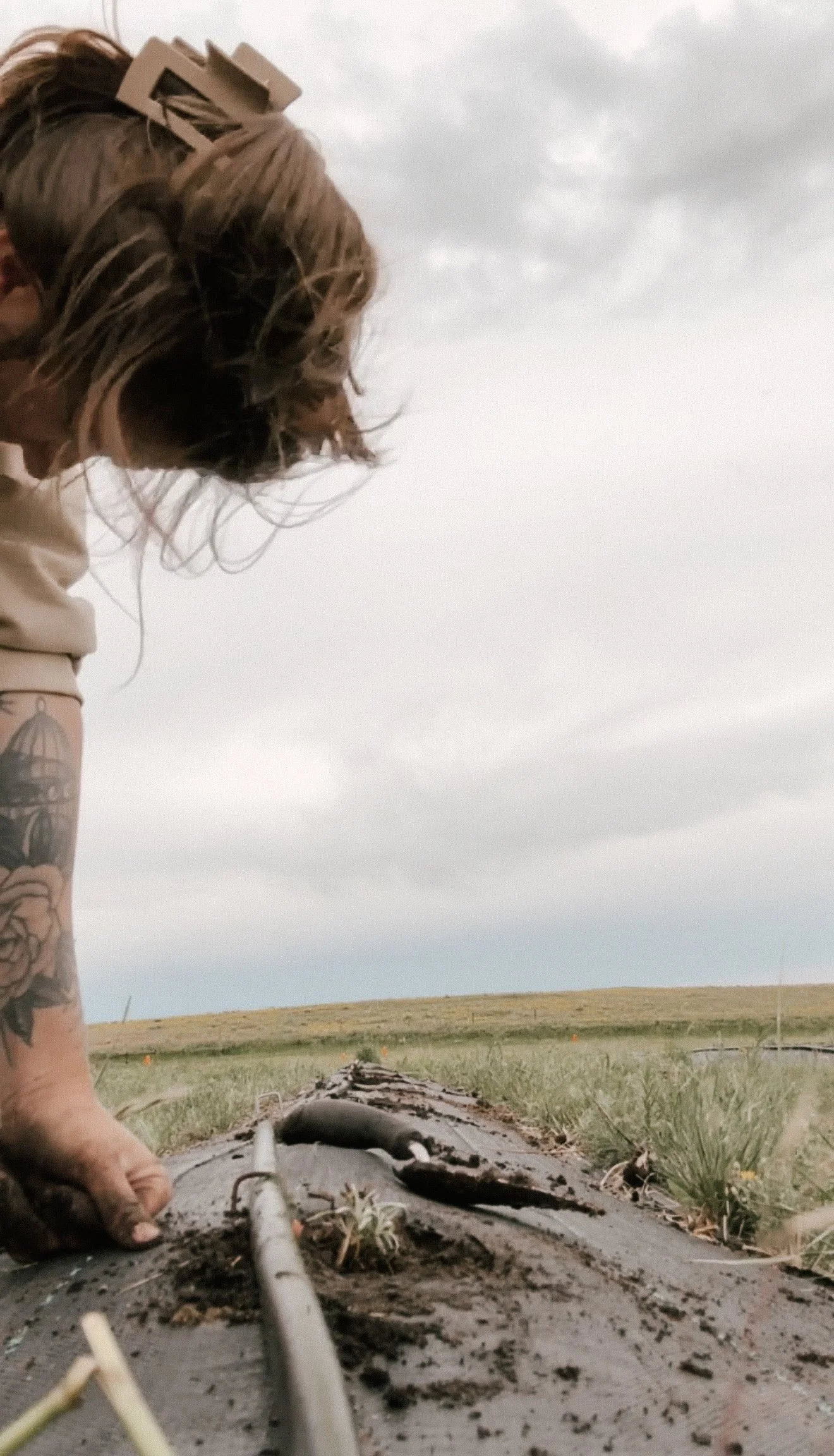
And as I’ve stood out in our fields since last fall, watching the soil begin to dry and tighten, wind blowing warmer and harder, the ground never freezing, I began a routine. With my head down I began going through the motions of hooking up hoses, and unhooking hoses, hauling hoses from zones to zones, and doing it all again in a few days. Now spring is here, and I've managed to keep almost everything alive over winter, but I’ve realized something.
The land isn’t the only place where drought can slowly settle in.
Sometimes, drought can quietly develop in us.
Not all at once. Not in a way that alarms you. But slowly, over time, in the middle of full days and busy lives. It comes in the rhythm of doing the same things over and over again. School drop-offs. Meals. Laundry. Sports practices. Work schedules. Responsibilities that never quite pause.
From the outside, it looks like a full life. A good life.
And yet, somewhere beneath all of it, something begins to feel… dry.
Not broken. Not falling apart. Just dull. Like the color has slowly faded from parts of your life you once felt deeply connected to. You wake up and do what needs to be done. You care for the people entrusted to you. You carry the weight of your home, your family, your responsibilities with quiet strength.
But somewhere along the way, you start to feel disconnected from yourself. From what you love. From what once made you feel alive.
And even your faith, steady as it may be, can begin to feel routine. The prayers are still there, but they sound the same. The time with God is still happening, but it feels distracted, shortened, or simply checked off. You believe in Him. You trust Him. But closeness can feel harder to reach. That fire-like faith has dimmed.
This is the kind of drought that often goes unnoticed. Because it doesn’t look like a crisis at first. It looks like routine. It looks like responsibility. It looks like showing up. You’re going through the motions with your head down hauling hoses from one commitment to another.
Out in the field, when the rain doesn’t come, the soil begins to change. It dries. It tightens. And eventually, it cracks. Deep lines stretch across the surface, creating the appearance that something is wrong, that life is leaving, that the ground itself is breaking apart. And if left unchecked, it's true.
Do you feel this way too?
I think this is where so many women find themselves.
Not in failure. Not in collapse. But in a quiet kind of dryness. Tired of the repetition. Disconnected from their passions. Wondering when the things that once brought joy started to feel so far away. Wondering where they went in the middle of building a life for everyone else. And sometimes, questioning their fullness of faith in it all.
But what if this season is not the end of something?
What if it is an invitation?
Because underneath that dry, fractured soil, something else is happening. Plants that are strong enough don’t stay near the surface when water becomes scarce. They don’t rely on what used to sustain them. They begin to go deeper. Their roots stretch downward, searching for water that cannot be found above. They spread wider, reaching beyond what was once enough. They adapt in ways they never had to when conditions were easy.
Because going deeper doesn’t always look like doing more. It doesn’t mean adding more to your already full life or striving to fix what feels off. It means returning. Returning to the parts of you that have been buried beneath responsibility. Returning to the things that once made you feel alive. Returning to honest prayer—not polished words, but real ones. Returning to God—not out of obligation, but out of intimate need to reconnect with Him and yourself.
And here is a truth we don’t say often enough—you can love your life and still feel like you’ve lost parts of yourself within it. You can be grateful and still feel dry. You can be faithful and still feel distant.
None of that makes you weak. It makes you aware.
The routines of your life are not meaningless. The meals, the car rides, the practices, the constant tending of your home and your people—this is good work. Meaningful work, and a worship to everything HE is. But if everything stays at the surface, if you never allow yourself to go deeper within it, you will begin to feel the drought.
Not because your life is empty, but because your roots haven’t started digging deeper for its water source. What will water you? Not just occasionally, but consistently?
Funny enough, as I am writing this, it is currently raining. This week has been our wettest one in a while. However, just like the out-of-nowhere date night, once-in-a “blue moon” girls night, and attending that one church service makes you feel refreshed, it doesn't stop the drought completely. The rain this week will, in no way, make up for the lack of snow pack in the high country. The snow pack that our Colorado towns rely on for its water reserves. Over time, not only have they not grown, they've depleted. A single refreshing rain is not going to add to our reserves, only offer us a moment of reprieve.
So maybe the question isn’t how to escape the life you’re living. Maybe the question is how to go deeper within it.
I want you to imagine your soul has a beautiful mountain inside of it. Then, I want you to imagine a wonderful steady snow fall that adds to the magnificent glaciers on top of it. Everything you can do that cools your brain, re-hydrates your passions, and refreshes your heart adds to those glaciers as a beautiful steady snowfall. Do you ever wonder why it’s so quiet when it snows? Apparently snow absorbs sound. I’d like to imagine your mountain being the quietest, most peaceful place. Muting all the noise of your busy life. Now, imagine Jesus saying to YOU, “Let anyone who is thirsty come to me and drink. Whoever believes in me, as Scripture has said, rivers of living water will flow from within them.” Your reserves are meant to FLOW, flow to you, flow to your family, flow to your community. The snow pack starts with you.
When was the last time you felt like yourself—not in the roles you carry, but in who you are? When was the last time you sat long enough to hear your own thoughts, to create something, to let your mind wander, to speak honestly with God? Where have you quietly accepted dryness as just part of this season?
Because just like in the field, the surface can look cracked, dry, and lifeless, while underneath, roots are stretching in ways you cannot see. Reaching for water that is still there, even when it feels far away.
You may feel like your life is repetitive. You may feel like your faith is dull. You may feel like parts of you have gone dormant.
But if you are still trying, still seeking, still reaching for something deeper inside of you—you are not stuck.
You are growing.
The drought is not where things dry up. The strong ones dig deep enough to last.
You, sister, are one of the strongest.
Stay watered,
Jessica
Shari Ann Farms