Sowing Slowly
There is a beginning to every garden season that happens long before anything is planted outside.
For me, seed starting doesn’t begin in the garden beds. It starts at my dining room table, often with my kids running around me. I work in small pockets of time—during nap time or once or twice a week—filling trays with soil and pressing seeds in one row at a time. It’s not rushed or done all at once. It’s consistent, simple work that builds over several weeks.
I usually begin in early March.
Outside, there is often still snow on the ground here in Elbert County, Colorado. The garden isn’t ready yet. The soil is cold, the beds are still dormant, and there’s nothing to plant outdoors. This year, with a warmer and drier winter, that urge to get into the garden has come even earlier—but the timing still isn’t right.
So the work begins indoors.
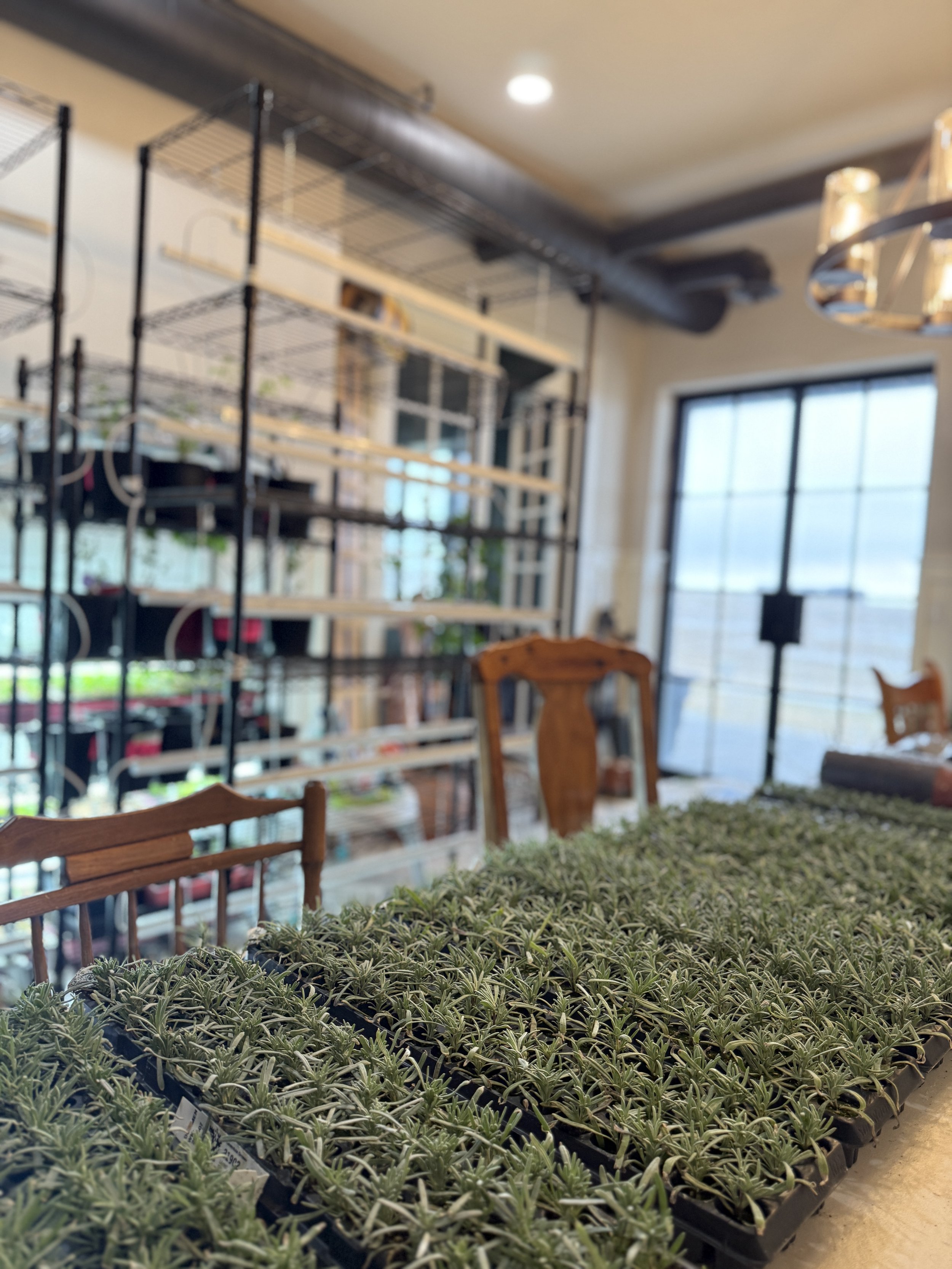
My dining room and grow racks ready to be filled.
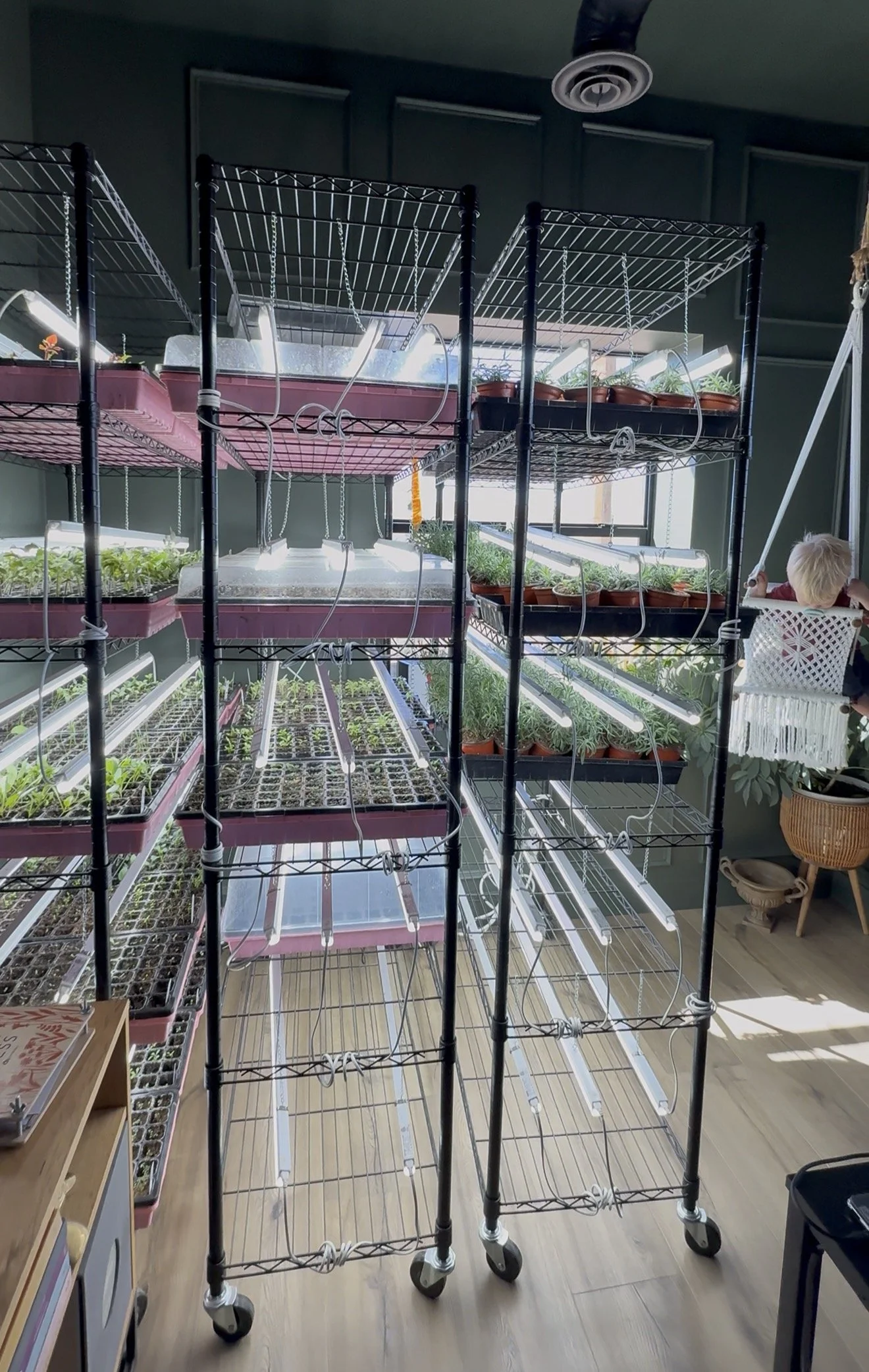
As the trays are planted, I move them into my office under grow lights, where they’ll stay for the next several weeks. It’s a space I’ve intentionally designed to be somewhere I want to spend time—filled with plants, books, watering cans, and pieces from past growing seasons. It draws me back in throughout the day to check on the seedlings as they begin to grow.
Between the noise of the kids, the snow still sitting outside, and the quiet routine of tending to these trays, there is a different kind of invitation here. One that asks you to slow down and pay attention to what’s starting—long before the garden is ready to receive it.
Seed starting is one of the most practical and important parts of growing a successful garden—especially in a climate like Colorado, where our growing season is shorter and less predictable.
By starting seeds indoors, you’re giving your plants a head start they wouldn’t otherwise have. Instead of waiting until the last frost to plant everything outside, you’re already weeks ahead, growing strong, established seedlings that are ready to take off once they’re planted in the garden.
It also opens the door to far more variety.
When you rely only on what’s available at local garden centers, your options are limited. But when you grow from seed, you can choose varieties for flavor, color, productivity, or how well they perform in your specific climate. You begin to grow a garden that feels more intentional—one that reflects your preferences, not just what was available on a shelf.
There is also a financial side to it.
One seed packet can produce dozens of plants for the same price as buying just one plant in the spring, sometimes even less. That adds up. Especially if you’re growing vegetables, herbs, or flowers in larger quantities. Seed starting becomes one of the most budget-conscious ways to garden well without sacrificing quality.
But even with all of these practical benefits, seed starting quickly becomes more than just a strategy for saving money or expanding your plant selection.
Because once you begin, you realize it asks something different of you.
Seed starting isn’t just about getting ahead in the season. It becomes one of the first places you are invited to slow down. There is no rushing it and no immediate result. You place a seed into the soil, water it, set it under light, and then you wait. And in that waiting, you may begin to notice something deeper within yourself.
How often do you expect quick results? How often do you move on when you don’t see progress right away? Seed starting gently challenges that. It asks you to stay. To return each day, to tend to something small and unseen, to care for it without proof that it’s working yet. And if you allow it, it becomes more than a gardening task—it becomes a reflection. A quiet place to recognize the areas of your life where you are also waiting, hoping, and doing the work without seeing the outcome yet. When you plant a seed, you are choosing to believe that growth is happening beneath the surface, even when you cannot see it. And in doing so, you are practicing that same kind of faith within yourself—learning how to remain steady, present, and committed, even in seasons that feel slow or unseen.
This is the same kind of faith God asks of us.
Not a faith that depends on what we can see, but one that trusts He is working beneath the surface, even when everything feels still. Scripture reminds us that “faith is confidence in what we hope for and assurance about what we do not see” (Hebrews 11:1). Just like a seed buried in the soil, so much of what God is doing in our lives happens out of sight first.
We are often in a hurry to see results. We want clarity, progress, and confirmation that what we’re doing is working. But God’s rhythm is different. He works in seasons. He develops roots before there is visible growth. He asks us to keep showing up, to keep tending what He has placed in front of us, even when it feels small or unnoticed.
There are seasons where your life may feel a lot like those seed trays—quiet, slow, and unchanged on the surface. But that does not mean nothing is happening.
Growth is still taking place.
And just like in the garden, it cannot be rushed.
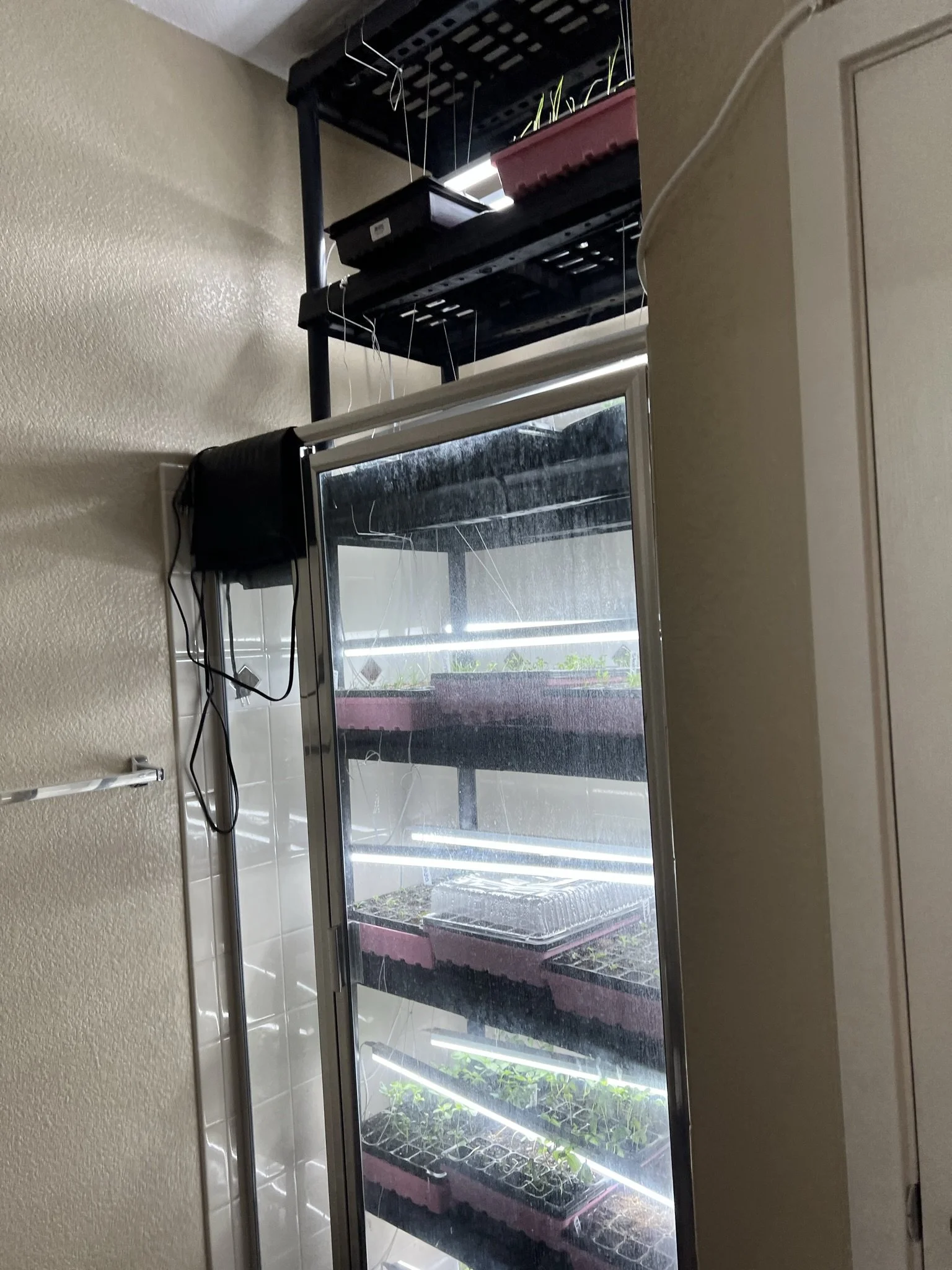
Before moving to the farm, I started thousands of seeds in the shower of my 2 bedroom apartment.
God is not asking you to force the outcome. He is asking you to stay faithful in the process. To trust that “at the proper time we will reap a harvest if we do not give up” (Galatians 6:9). What is planted, what is being nurtured, and what is being worked on in the unseen will, in time, come to life.
You don’t have to be an expert to begin, and you don’t need the perfect setup, a greenhouse, or every tool you’ve seen online. You don’t have to have it all figured out before you start. In many ways, seed starting invites you to begin before you feel ready.
This invites you into a different kind of practice; one where you slow down, work with your hands, and learn to sit in the quiet rhythm of tending something small. As you return to it day after day, you begin to care for what’s in front of you, trusting that something is happening even when you can’t yet see it. And over time, it becomes more than a way to grow your garden. It becomes a way to steady yourself, to create space in your life where you are not rushing, striving, or trying to control the outcome, but simply participating in the process—learning how to hold both effort and faith in the same hands.
And if you feel intimidated by seed starting, you are not alone. There is so much information, so many opinions, tools, and systems that can make it feel overwhelming before you’ve even begun. It’s easy to believe you need more knowledge, more space, or more equipment to do it well. But you don’t. You just need a place to start.
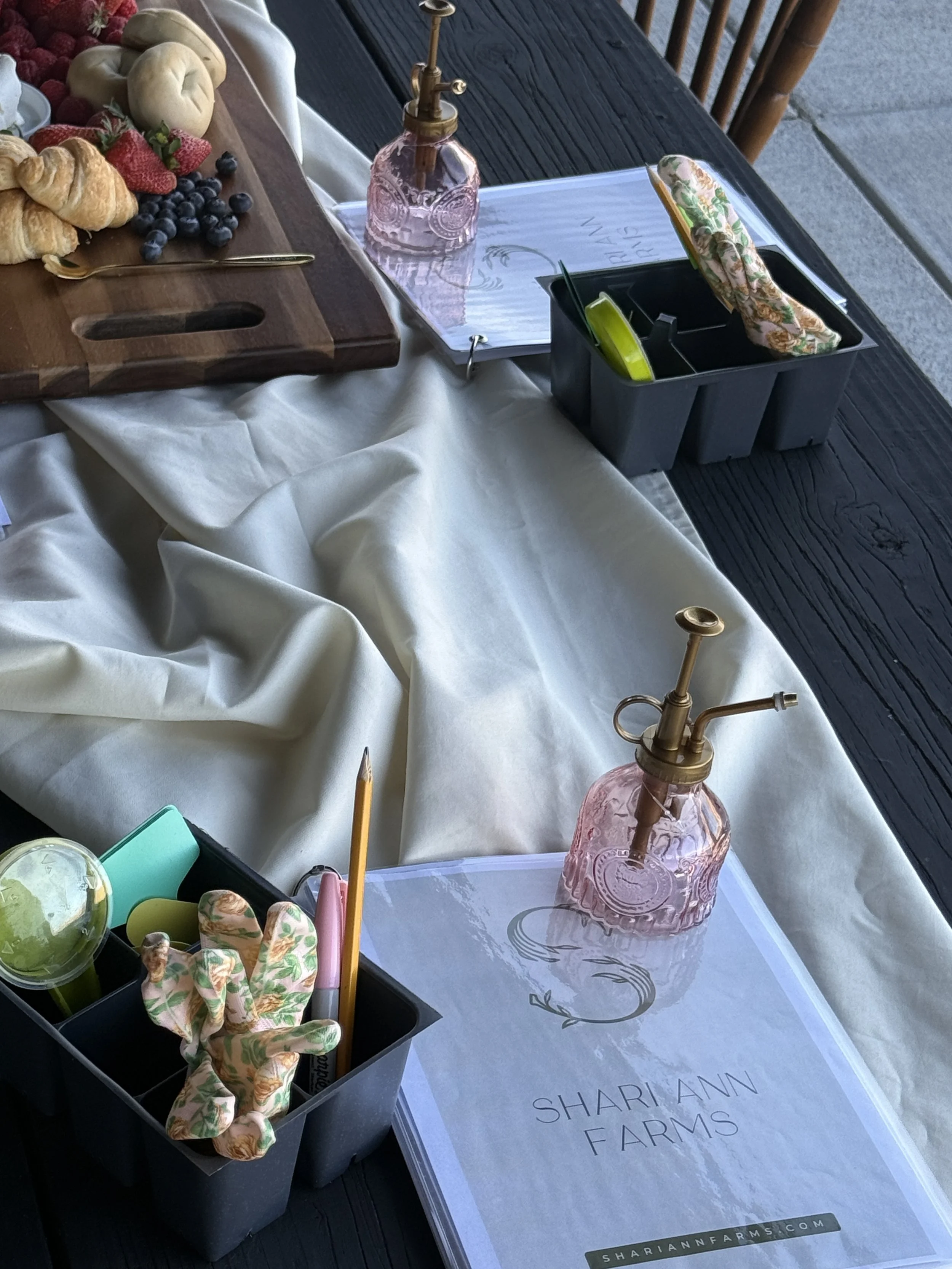
My seed starting workshops are small and intimate.
That’s exactly why I created my next workshop, on April 18. This experience is designed to simplify the process and give you a clear, confident starting point. You’ll learn what actually matters, get hands-on experience starting your own seeds, and leave feeling capable instead of overwhelmed. More than that, it’s an opportunity to slow down, step away from the noise, and experience seed starting the way it was meant to be—steady, simple, and full of purpose. If this is the year you’ve been wanting to begin, this is your invitation—not just to grow a garden, but to practice something deeper as you do.
Because a seed is never just a seed. It holds the promise of what’s to come, even before there is any visible proof. And when you choose to plant one, you are stepping into that promise—you are choosing to believe that something small, something unseen, can grow into something abundant in time.
The garden will come. The beds will warm, the plants will be planted, and the season will unfold as it always does. But before all of that, there is this quieter beginning. This work is done at the table, in the stillness of your home (sometimes during naptimes), in the waiting.
And maybe that’s where it matters most.
Because what you are practicing now—the slowing down, the tending, the faith in what you cannot yet see—doesn’t just prepare your garden. It prepares the garden of your heart.
So as you begin this season, don’t rush past this part.
Let it shape you. Let it steady you. Let it remind you that growth doesn’t start when everything is ready—it starts when you choose to begin. And what you plant in faith today will become something you thank God for tomorrow.
Lets sow something together,
Jessica
w/ Shari’s